Phase 2: Idea Collection
Engaging Communities to Transform Their Surroundings
Key Skills
- Collaboration
- Outreach
- Training & capacity building
- Facilitation
- Designing for accessibility
At a Glance
During idea collection, we invite communities into an ideation process where they propose concrete ideas to improve their environments using PB funds.
This phase requires an accessible way for people to identify the issues that matter most, explore the root causes, and suggest solutions that address those needs. Idea collection is as much about creating spaces for people to dream and discuss different ways of meeting their needs as it is about collaboration and strong project management.
The most successful strategies PBP has seen are designed with input from community members with diverse identities and experiences, especially those who understand the inner workings and needs of their communities. Working with the Steering Committee to shape your idea collection approach – and to identify effective ways for them to engage their neighbors, will help maximize participation.
The Steering Committee, ideally representative of people most often left out of traditional decision-making spaces, plays a key role in designing an idea collection and outreach approach that makes participation simple and meaningful for their communities.
Partnering with local organizations to conduct idea collection will also open opportunities for the process to feel different than traditional government decision-making by incorporating it into the fabric of society through events such as fairs, festivals, weekly gatherings, and existing programming. It also allows for strong facilitation of these conversations, since they may have pre-existing relationships with community members, and a strong understanding of what is important to them.
Formalizing these partnerships with local groups to carry out idea collection will help community members learn more about their community and its needs by creating new connections, surfacing existing programming and initiatives, and highlighting programming or resource gaps, which will ultimately enrich your PB process.
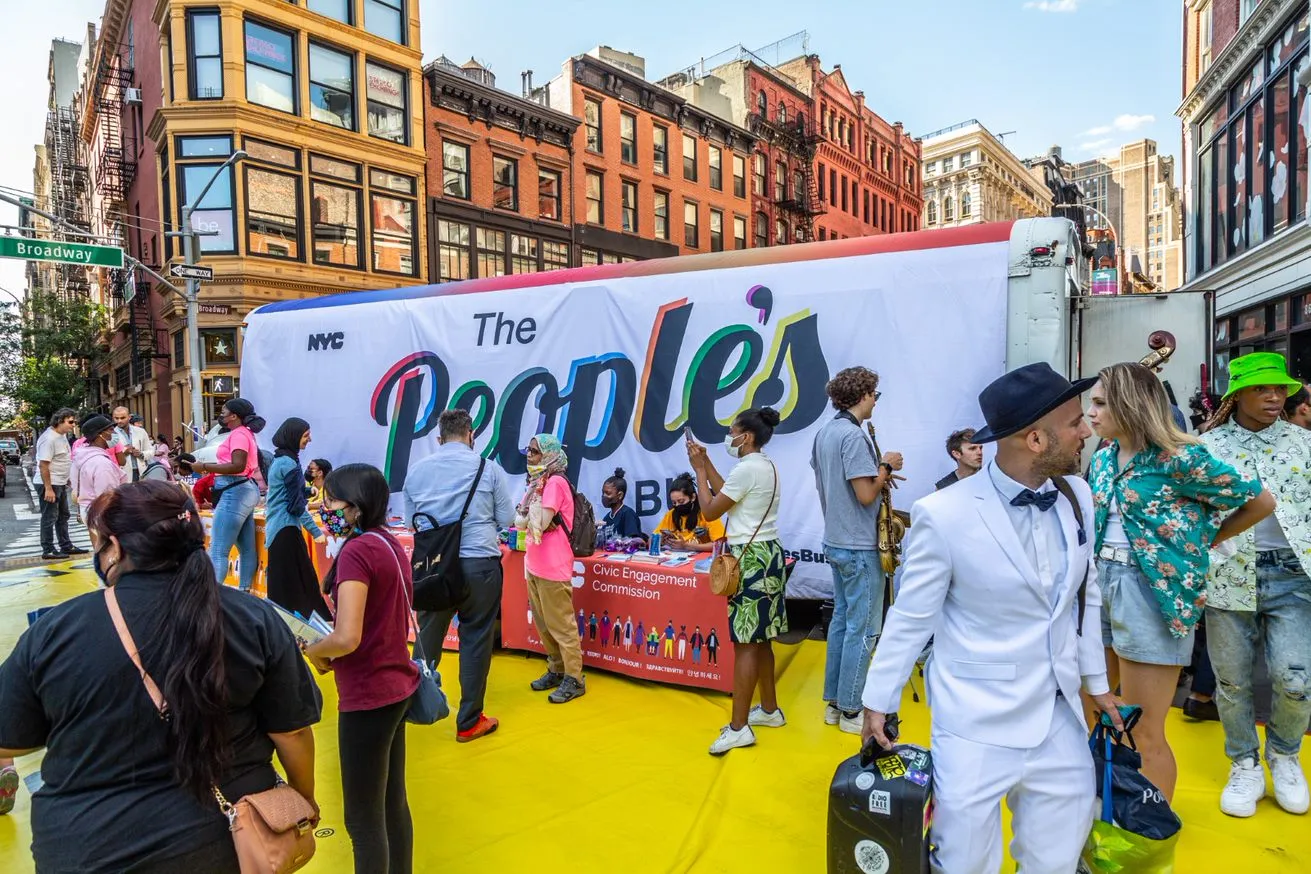
In addition to the Steering Committee, it’s important to partner with local organizations that know how to connect with the communities they serve in ways that feel comfortable and effective. This can be a great way to include more vulnerable populations in the process, especially those who might not have the time to serve on the Steering Committee.
Goals
Design spaces where community members can identify their most pressing needs and explore creative ways to address them through PB
Facilitate spaces for safe dialogue and mutual understanding
When discussing community needs, disagreements over priorities are natural. Idea collection conversations can help people understand each other’s perspectives, and help governments and institutions better understand community needs. Strong facilitators who know the local dynamics can guide these conversations in ways that feel safe and lead to growth and understanding.
Educate participants and invite them to stay involved
For many people, this will be their first experience with PB. Making this experience accessible and meaningful, and showing them how they can continue participating beyond this stage, will build the foundation for the rest of the process.
Remove barriers to participation Meet people where they already are (such as community events, places of worship, parks, schools, or online spaces), and provide different ways to share ideas. This makes it possible for people to participate no matter how much time they can commit.
Invite people to turn ideas into concrete budget proposals
Idea collection events are a perfect moment to encourage deeper involvement. When someone has just contributed an idea, let them know how they can join the next phase—by working to turn those ideas into concrete budget proposals. This builds ownership and helps strengthen community leadership in the process.
Planning
Planning an effective and accessible idea collection strategy that will reach the communities you are serving requires planning it well before idea collection begins. Below are a few key considerations to help you make your idea collection plan:
How You Will Communicate With Community Members & Collect Ideas: Will You Use Technology
Although technology is not required to run idea collection, it is helpful to have a centralized digital location where community members can easily and transparently understand what has taken place in the process, what is coming up, and how to get involved. Platforms such as Decidim have been specifically designed to collect ideas in participatory democracy and support transparency and deliberation. For example, Decidim includes features that allow residents to follow a specific idea to get status updates on them. They can “like” and comment on specific ideas, which can help increase transparency and inform the development of proposals by providing extra data on the level of community support.
The platform(s) that will be used to communicate updates and collect ideas will ideally have been chosen before idea collection has taken place (visit the Preparing for PB Section of the Manual if you would like some guidance on timeline and considerations to choose a platform).
- How you will set up your idea collection platform or website: The Steering Committee can help you vet the way the platform has been set up and give feedback on ease of use, content, and clarity
- Communications Plan for Events: Once the platform has been chosen, it is helpful to create a communications plan to announce all the idea collection events that will take place both in person and online with accompanying details about how to attend.

Example pictured above: Pawtucket & Central Falls, Rhode Island used Decidim to collect ideas, votes, and announce events.

What Questions Will You Ask During Idea Collection?
- Plan the specific questions you will ask in different spaces: In order to help people think of ideas that are meaningfully rooted in community needs, you will want to identify the specific prompts you ask, and test them a few times to make sure they are clear and will lead to meaningful dialogue and ideation.
Work with your Steering Committee to design conversations that inspire people to share ideas that address the issues that matter most to them and could make the greatest impact. Broader needs assessments, focused on the general issues that matter most, can take place during facilitated discussions and help anchor suggested ideas in people’s greatest needs. Visit the Template Idea Collection Form and the “Designing Idea Collection Conversations” Guide for examples
Questions you can ask your Steering Committee to support you in creating a dynamic idea collection strategy include:
- What are ways we can make people feel comfortable and have real discussions in community spaces?
- How can we create spaces in person and online where people can dream?

Community Engagement
- Develop a plan to ensure diverse event types across different communities: To do this well, we recommend formalizing partnerships with local organizations who can be community engagement partners in the pb process.
A simple way to formalize these partnerships is to establish a Memorandum of Understanding (MOU) with local organizations to conduct idea collection events. When drafting your MOU it’s important to consider when payments will be made so that organizations can cover the costs of holding PB events.
Organizations can either use existing programming and planned activities to conduct idea collection, or plan additional events dedicated to PB. Some of the most exciting events we have seen local organizations host to collect ideas include family skate nights, open mic nights, and free dinners.
Leveraging existing spaces and activities organizations already host can help keep the process accessible and prevent it from taking too much of their time. In this way, these local community engagement partners can develop outreach strategies that build on their ongoing work.
- How you will support community engagement partners & amplify their events: Plan your communication with community organizations: track their events, incorporate them into your communications plan, and help ensure the widest possible reach.
- Plan a variety of idea collection events for community members with different schedules and availability.
For community members with limited time events can include:
- Short (5–10 minute) idea submissions, online or in person
- Tabling at existing community events, fairs, block parties, or sporting events
- Idea collection booths at community centers or schools, staffed to explain the process
- Collecting ideas online
Needs assessments:- Platforms such as Polis can be used to ask the general public to deliberate over the greatest issues to solve in their community. Here, you can pose a single question such as “what are the most important issues to address to improve the city?”
- People can respond to each other’s statements online and the platform produces a report that can be a part of a broader needs assessment to help inform the next phase by providing an idea of the main issues in the community that ideas should aim to solve.
- After they take this step, you can prompt them to submit ideas. A review of what people have stated on pol.is can also be integrated into live facilitated discussions. Posing this kind of question is optional – you can also simply ask people to submit ideas.
Pop-Up Idea Collection
Meet people where they are & collect ideas while they’re passing through

Collecting ideas at parks

Tabling outside of central areas

Collecting ideas at existing events or creating your own!
Best for:
- Collecting a large # of ideas without requiring a large time commitment
- Getting broad participation from specific neighborhoods
Events for community members that have more time to participate can include:
- Longer conversations where community members discuss and deliberate solutions to the greatest gaps they see
- Facilitated discussions during existing programming, such as youth programs or school class time
- Repurposed meetings at community-based organizations
- Dedicated participatory budgeting events
Deliberative events give your community the relational benefits of participatory budgeting, helping people connect and work together to address the needs they see.
Facilitated Discussions
Meet people where they are & collect ideas while they’re passing through

Best for:
- Understanding the needs & priorities of different communities
- Understanding the root causes behind different issues communities are experiencing
- Encouraging dialogue, deliberation, and mutual learning between community members and government
Longer idea collection conversations support proposal development by providing deeper insight into community needs and ensuring ideas are meaningfully rooted in discussion. Shorter events broaden reach and improve accessibility. Using a mix of both event types helps maximize participation.
Keep in mind that it is easier to get a good turnout when you meet community members where they already are. If you are inviting them to an event entirely dedicated to PB, you’ll want to conduct plenty of outreach and host it at a central location that is easily accessible and can be reached by public transit (if available). It helps to provide food and incentives (such as gift cards) to encourage attendance, and offer child-care.
- Plan to translate materials and provide paper idea collection forms to your community engagement partners: Work with them to determine how many forms are needed in commonly spoken languages and coordinate with translators to ensure ideas are processed. Set a schedule for delivering and collecting forms so they can be uploaded to your idea collection platform. It can help to start by asking translators how much time they’ll need, and incorporate that into your timeline.

Best Practice
Provide a strong method for note-taking at facilitated discussions so the information generated here can help inform the proposal development process
Ask the same general questions in your idea collection forms for short events as you are asking in longer events for consistency
Visit our Template Idea Collection Note-taking form for examples of what this can look like
Design The Workflow That Implementing Agency(ies) Will Use to Vet Ideas Including:
- Timeline and process to vet ideas for proposal development: Proposal development (the phase after idea collection) often involves many moving parts, so it’s important to decide on tools and processes for agencies to vet incoming ideas. Agencies can start providing feedback on legal or budget constraints to ensure ideas are feasible. Starting idea review on a rolling basis allows community members to begin proposal development with all relevant context.
- Decide how you will categorize project ideas: While thinking about the workflow you will use with relevant departments or agencies to vet ideas, decide how they will be categorized in a way that supports the vetting process. Refer to the Categorizing Ideas Tip Sheet for guidance. If you are using a platform like Decidim, the platform will ask people to select from the categories you will have pre-populated, which will help ideas be pre-sorted for proposal development committees.
Questions To Include in Your Surveys To Evaluate the Process
- Work with your evaluation team to design survey questions to evaluate the process: Getting demographic data can be important to track who participated in idea collection and adapt your outreach approach during the next phase if any voices were under-represented.

Training
- Community engagement partnership overview: If you’ve formalized partnerships with local organizations to host idea collection events, schedule training sessions at times that work for them. Trainings should cover the partnership overview, payment timelines, and key details about the participatory budgeting process (such as project eligibility, how it works, the timeline, and ways to get involved) so partners are ready to answer community questions.
- How to facilitate ideas: Training facilitators is essential for consistency and partner success. Cover key details: idea collection dates, next steps, process goals, and how to submit ideas and notes. If ideas are collected on paper, schedule pickup and clarify how to handle forms in other languages.
It can be helpful to make a recorded version of the idea collection conversation for your community engagement partners to look back on. Platforms such as loom simplify making these trainings and their availability can enable anyone who wants to facilitate their own discussion (such as teachers or community leaders) to be able to easily do so.
- Train agencies to review & provide feedback on ideas: Train agencies on how to review project ideas, the goals of their feedback, expected review frequency, and deadlines to ensure timely vetting before proposal development. Run a practice session with submitted ideas to surface assumptions and address them. Emphasize that the goal is to provide the feedback necessary to help make ideas feasible (if they are not feasible, explain the changes to the idea that would be required). Check out the Internal Idea Review Team Training to help you design their onboarding session.
implementing
-
Put your communications plan into action: With idea collection events underway, use your communications plan to boost outreach and help community engagement partners promote their events.
-
Document events: Community members and the general public will want to know where ideas were collected and who was engaged. To support transparency and storytelling, take or collect pictures and stories from idea collection events.
-
Upload ideas collected on paper & send them for review: In order to get ideas reviewed on a rolling basis and avoid having a backlog of ideas to be reviewed at the end of the process, try to collect and upload idea collection forms soon after events have taken place. This also allows members of the public to engage with ideas on your PB platform (if applicable).

Looking Ahead
Because proposal development is complex and requires collaboration across agencies and community members, you will want to start coordination, outreach, and training during idea collection to keep the next phase on track, including:
- Recruit proposal developers & facilitators: During idea collection, continue outreach to recruit community members who will research project ideas and turn them into full proposals (proposal developers or “budget delegates”), as well as facilitators for the proposal development committees. You can adapt tools like the Sample Proposal Developer Interest Form (paper and Google Form).
- Set up your proposal development infrastructure:
- Prepare scoring tools so proposal developers can rate ideas and decide which to develop. You can get started by adapting the Idea Scoring Tool for your own context.
- Choose a space for drafting proposals and create a template that captures all the key details for consistency of information among proposals on the ballot. Check out the Proposal Drafting Tool to help you get started with your template.
- Decide on your format: If you’re using a platform like Decidim to run your pb process, you can set the questions in your proposal up there. If you prefer Word, Google Docs, or another format, create the template and share it with your team.
- Make collaboration easy: Since proposal developers often work in teams, store the scoring tool and proposal template in a shared drive (like Google Drive).
- Idea review workflow: As you attach specific deadlines to your proposal development timeline, it will be important to think through the collaboration workflow between your internal idea review team and proposal developers. While proposal developers from the community will research ideas and refine them into full proposals, they will need the support of your internal idea vetting review team to ensure the proposals they would like to move forward are feasible under this process.It can be helpful to ask your internal team for dates that are particularly busy for their departments so you can avoid creating deadlines around these times, and maximize the chances of having an efficient idea review process. You can reference the Internal Idea Vetting Team Memo for a sample of this workflow and a template you can customize for your own process. It can be helpful for departments to review ideas on a rolling basis as ideas are submitted during idea collection to avoid having a backlog of hundreds of ideas to review and provide feedback on.
- Onboard Your Idea Vetting Team: Prepare the internal team that will work with proposal developers to review submitted ideas for eligibility well before proposal development begins. This gives them time to plan their schedules and clarify any questions about the process. In a government setting, this often includes representatives from multiple agencies. Make sure they understand their role, what criteria to vet for (such as legal or funding feasibility), the expected timeline, and how they can support proposal developers by providing the context needed to keep ideas feasible. For guidance, check out the sample Internal Idea Review Training template, which you can customize for your team.
- Onboard Proposal Development Facilitators: Once you have recruited enough facilitators to keep your proposal developers on track (and facilitate their meetings), you will also want to onboard this group to the proposal development process, their role, and how the implementing entity will support them in answering questions & keeping proposal developers on track. You can use the Proposal Development Committee facilitator Training Guide template to create your own onboarding tool with this group.
Refer to the Training section of the Proposal Development chapter to help you develop the training for your Idea Vetting Team and Proposal Development Facilitators.

Resources
Idea Collection Conversation Facilitator Guide
Use this customizable guide to help you design your idea collection discussions. The guide walks you through types of idea collection conversations and sample prompts to help you decide on the style of discussion that’s best for your context.
Proposal Development Committee Facilitator Interest Form
You can use this sample interest form to draft your own to recruit Proposal Development meeting facilitators.
Proposal Developer Interest Form
Use the Proposal Developer Interest form to recruit Proposal Developers. The form can be handed out during idea collection facilitated discussions to encourage people who want to continue to be involved to serve as a Propo
Internal Idea Vetting Team Memo
This template memo can be sent to government agency staff to let them know proposal development will soon begin, and an overview of their expected role. You can send this in advance of their training.
Internal Idea Review Training
Use this template slide deck to take the guesswork out designing your Idea Review Team training. Make sure to adapt it to include any specifics in your unique PB process.
Idea Scoring Tool
The Idea Scoring Tool is used during proposal development meetings to score and prioritize which ideas Proposal Developers would like to move forward for research. The template can be customized with your Steering Committee and Proposal Developers can make edits to make sure the criteria used suits your context. You’ll want to prepare this material before proposal development begins!
Proposal Drafting Tool
This template drafting tool contains the key questions you will want Proposal Developers to answer when developing ideas. You will definitely want to set this up before proposal development begins so you can onboard your Idea Vetting Team and Proposal Development Meeting Facilitators to it, and set it up in your PB platform.
Proposal Development Committee Facilitator Guide
Use this template to help onboard Proposal Development Committee Facilitators. As with all our customizable templates, you’ll want to make sure you adapt it to your own context and list the workflows you will use for your own process. We’ve highlighted areas you should adapt!